
Cold Plunging Isn't the Fix: Why Your Wellness Routine Might Be Working Against You
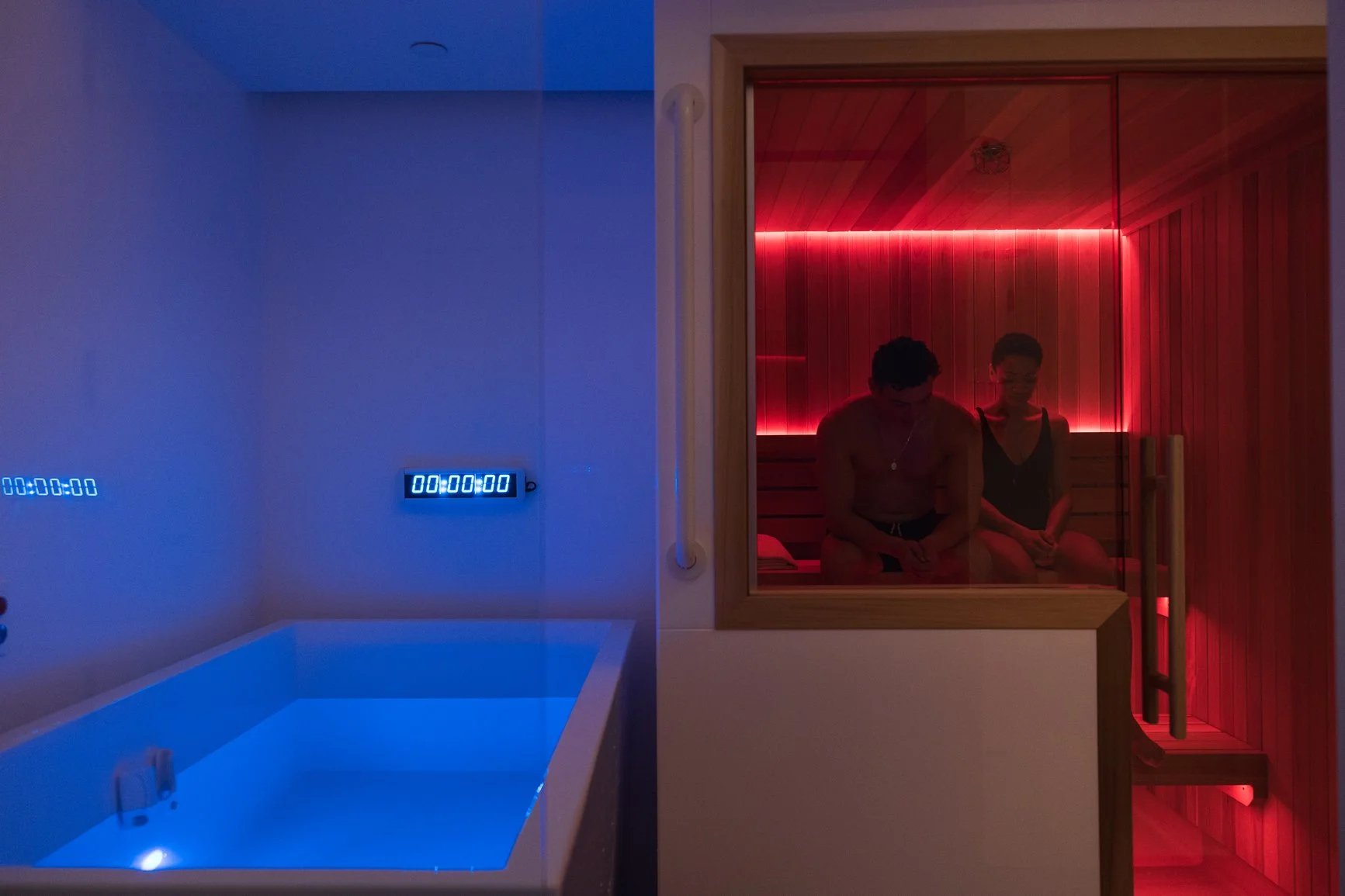
You've optimized your morning. The alarm goes off at 5:30, you're in the cold plunge by 5:35, followed by breathwork, maybe a sauna. You've listened to the podcasts, read the research on dopamine and norepinephrine, and you're following the protocols to the letter. You feel incredible afterward. Alert. Focused. Alive.
So why can't you sleep?
Why are the nightmares back, or worse than before? Why does your body still feel like it's bracing for something you can't name? You're doing more for your health than most people will attempt in a lifetime, and somehow the anxiety hasn't budged.
As a somatic therapist who works with driven, capable adults, I see this pattern often. People who approach their nervous system the same way they approach everything else: with research, discipline, and an unwillingness to quit. That very approach is what's often keeping them from getting better.
Your nervous system is not a performance problem
Cold plunges, contrast therapy, and intensive breathwork are potent autonomic provocations. They activate your sympathetic nervous system, hard. Research has shown that cold water immersion can trigger a 200-530% increase in norepinephrine, the same neurochemical involved in your fight-or-flight response, depending on temperature and duration. For a well-regulated nervous system, this can be genuinely beneficial. The system activates, recovers, and capacity builds over time.
But for someone carrying unresolved trauma, particularly developmental trauma, the kind that wires your nervous system during childhood to stay on alert, you're not building capacity. You're adding more signal to a system that's already overwhelmed with noise. The body can't distinguish between useful stress and one more thing it has to survive. It just registers: more.
And that "more" has to go somewhere. Often it shows up at night, when the prefrontal cortex goes offline and the body tries to process what it couldn't discharge during the day. Disrupted sleep. Nightmares. That 2am waking that feels both random and inevitable.
Why intensity feels like the answer
There's a reason driven people gravitate toward these modalities, and it goes deeper than a podcast recommendation. For many people with a history of trauma, intensity feels familiar. It feels productive. Calm, by contrast, can feel uncomfortable or even threatening, because for a nervous system that learned early that safety was unreliable, stillness meant vulnerability.
A cold plunge feels like doing something. A breathwork class feels like a breakthrough. The surge of energy afterward feels like proof that it's working. But activation is not the same as regulation. Feeling something intensely is not the same as processing it. And pushing through your body's signals, the disrupted sleep, the persistent tension, the wired-but-tired feeling, is just the wellness version of the same override pattern that brought you here.
I see this with breathwork classes in particular. Holotropic breathwork, Wim Hof protocols, aggressive pranayama: these are powerful practices that can induce significant physiological and emotional activation. In a class setting, someone might have a massive emotional release and the room treats it as a breakthrough. Without a trauma-informed framework, without relational safety, without the ability to titrate the experience, that "breakthrough" may actually be a dissociative episode or a sympathetic flood the person's system has no way to integrate.
And few of these classes conduct a trauma screen. Nobody asks whether you have a history of developmental trauma or chronic insomnia before putting you through thirty minutes of forced hyperventilation. The assumption is that more activation equals more healing. For many people, the opposite is true.
How to tell if it's working
Cold exposure and breathwork are not inherently harmful. They're tools, and like any tool, their value depends on context. The question isn't whether to do them. It's whether your nervous system is integrating the experience or learning to override its own signals.
Pay attention to what happens in the hours and days after, not just the minutes.
Integration looks like gradual improvement over time. Sleep quality gets a little better week by week. You feel more settled, not just more activated. You notice sensation in your body with curiosity rather than urgency. Your baseline shifts toward ease.
Override looks like a temporary high followed by the same patterns. You feel amazing for a few hours, then the insomnia returns, sometimes with a vengeance. You need the practice to feel normal. The nightmares persist or intensify. Your energy during the day comes with an edge of vigilance underneath it.
If you've been consistent with cold exposure for two weeks and your sleep is the same or worse, your body has given you clear information. That's not a failure of discipline. It's your nervous system telling you the dose exceeds its capacity to integrate.
What regulation actually looks like
The instinct is to push through. Add another protocol, extend the duration, stay more disciplined. But the nervous system doesn't respond to willpower. It responds to safety.
This is where most wellness advice stops, and where somatic work begins.
In my practice, I work with people's nervous systems directly. Not through conversation about what happened to them, though we do that too, but through the body's own language: sensation, impulse, the subtle shifts that happen below the level of conscious thought. A jaw that unclenches. A breath that deepens without being told to. The moment a client notices their shoulders have dropped and they didn't decide to relax them.
This work is built on a principle called titration: small, manageable doses of activation followed by recovery and integration. Rather than flooding the system with intensity and hoping it adapts, we work at the edges of what the body can tolerate, then let it settle. Then the edge moves. Capacity builds, not because you forced it, but because your nervous system learned, through direct experience, that it could activate and come back.
It's not shocking like a cold plunge. It's less dramatic than a breathwork breakthrough. There's no protocol to optimize, no metric to track, no morning routine to post about. What there is, for most of the people I work with, is the first time their body has felt genuinely safe rather than just managed.
That distinction matters. Managed means the anxiety is still there but you've built a sophisticated enough system of practices to keep it below the surface. Safe means the nervous system has actually recalibrated. You're not white-knuckling through calm. You're calm.
For most capable adults who've spent decades performing wellness, or performing composure, or performing "I'm fine," that recalibration is the thing they've been looking for without knowing how to name it.
The brave move
If your wellness routine looks right on paper but your body is telling a different story through insomnia, persistent anxiety, nightmares, or a feeling of being wired that never fully resolves, the answer probably isn't to push harder. It's to get curious about what your nervous system has been trying to say.
What if the brave move isn't the cold plunge? What if it’s listening.
If this resonates, somatic therapy might be worth exploring.
Margaret Sigel is a Licensed Marriage and Family Therapist and Somatic Experiencing Practitioner (SEP) in Santa Monica, California, specializing in somatic therapy for anxiety, trauma, and burnout. She works with adults in person and online throughout California.